I do not, however, completely agree with Santag's argument. Yes, a photo does not capture the whole truth. But is it really meant to? A photograph can be left to our interpretation, and in that sense, it is a form of art. There is a story or meaning behind every piece of art and it doesn't always stare at you right in the face.
Sunday, March 30, 2014
Too much focus on taking the perfect selfie?
Much of today's society spends time taking photos of useless things. There are people literally taking pictures of everything they come across just to make sure they don't forget the moment. But what is there to forget when there isn't anything being learned or no moment being lived through? You are only living through your photographs and not in the moment. I can recall several events where I viewed things for the first time in the photographs and I didn't remember actually seeing it with my own eyes. This is where today's technology and our obsession with capturing our every living moment goes too far; we also lessen the value of a photo. Too many teens today are focused more on getting the perfect selfie and in the process, are not enjoying the moment for what it is.

Sunday, March 23, 2014
Let's focus on a better today!
Many believe it is important to preserve the environment for a better tomorrow. But what's the use of that? Let's just focus on getting the most out of today and let tomorrow's people worry about tomorrow. Millions of people spend their time and money on things to help the environment and they probably won't even be alive to see the results! What a waste! We should invest our money into using all the resources we can get out of the earth in the present so mankind can live to its fullest potential. Technology is advancing anyway, right? The future will be able to find its own resources. Some people might say that we are all eventually going to be part of the future. Although this is true, as aforementioned, with advancements in science and technology, we should not have to worry. Scientists are working on it.
Recycling is time consuming anyway. You have to get a separate bin and everything and bins aren't free. If you're not worried about yourself, think about others! People at recycling centers have to sort through all the recyclables; that must cost them a lot of time. Also, think about how many poor children you could feed with the money you use to buy recycling bins. If we just threw everything away, it would be a lot easier for everyone. Everything would just be burned up and taken care of. There might be some gases released from that but it's not like it's that noticeable. Take a deep breath right now. Do you feel like your inhaling anything harmful? Chances are the answer is no. This is because the human body is very adaptive and we tend not to notice certain stimuli after a period of time. Scientific studies and facts prove this phenomenon.
If you're worried about the animals, then don't! Survival of the fittest! The best of the best will survive and evolve resulting in stronger future generations and it would be foolish not to help strengthen the future.
If you look at the big picture and take into account all the factors, helping to "save" the environment really isn't worth all the money and time. Our environment is fine the way it is.
Recycling is time consuming anyway. You have to get a separate bin and everything and bins aren't free. If you're not worried about yourself, think about others! People at recycling centers have to sort through all the recyclables; that must cost them a lot of time. Also, think about how many poor children you could feed with the money you use to buy recycling bins. If we just threw everything away, it would be a lot easier for everyone. Everything would just be burned up and taken care of. There might be some gases released from that but it's not like it's that noticeable. Take a deep breath right now. Do you feel like your inhaling anything harmful? Chances are the answer is no. This is because the human body is very adaptive and we tend not to notice certain stimuli after a period of time. Scientific studies and facts prove this phenomenon.
If you're worried about the animals, then don't! Survival of the fittest! The best of the best will survive and evolve resulting in stronger future generations and it would be foolish not to help strengthen the future.
If you look at the big picture and take into account all the factors, helping to "save" the environment really isn't worth all the money and time. Our environment is fine the way it is.
Sunday, March 16, 2014
"All good things are difficult to achieve; and all bad things are very easy to get."
-Confucius
Scientific advancements that yield positive results are difficult to achieve while the negative results just come along without any hints of their arrival. As mentioned in A Measure of Restraint, Marie Currie worked long and hard to discover radium and while the positive effects were difficult to achieve, the negative effects were quick to show themselves. This just goes to show how unpredictable science and nature really is. We may think we have the power and technology to do so much, but in reality, we are powerless in the face of nature. During storms and other natural disasters, our advanced technology can do nothing to save us. We have to surrender our power to nature and protect ourselves. If we try too hard to beat nature, we are almost asking it to fight back. For example, with genetic engineering, although there could be many benefits, one simple error could result in permanent damage as a "gene is potentially immortal" (Raymo). To what extent is it really okay to experiment with science? Mankind should be aware of that extent and approach science with a measure of restraint.


Sunday, March 9, 2014
What can we do to solve the puzzling problem of child labor?
Once upon a time, many very young children would have to work long and hard hours in dangerous factories/conditions for little pay and with little safety just to produce goods for everyone else to enjoy. While most kids today are able to enjoy their youth fantasizing about unicorns and pink elephants without worries, many young children then were not even able to enjoy basic things like a good night's sleep. They were forced to work through the day and most of the night in conditions that could have been severely detrimental to their developing minds and bodies. Kelley utilizes powerful rhetoric to persuade the audience of women to become a part of her cause to end child labor through women's suffrage. She strongly uses pathos to evoke empathetic feelings from her audience. To rally support and appeal to the emotions of her audience, Kelley uses much of the following: strong imagery, compelling diction, statistics, repetition and parallel structure. For example, parallelism is used in the last paragraph to state that "they [children] spin, they stamp, they carry" and in the mean time, no one does anything to end it. We know this is wrong, so why don't we do anything? She allows the audience to reevaluate their actions or lack there of; by not doing anything to end child labor, Kelley states that they in fact are contributing to it. She offers a clear solution to this great problem: "enlist[ing] the workingmen voters..to [free] the children from toil" and the "right of petition." Kelley implies that this would not only free the young children from the burden of labor, but it would also "free their consciences" and make them better people overall and in the eyes of Jesus.
Sunday, March 2, 2014
Sikh Americans and Public Space
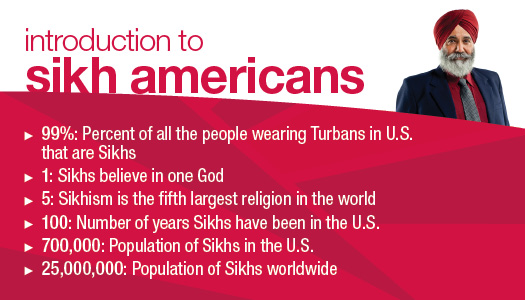
After reading Black Men and Public Space, I felt an instant personal connection. I am a Sikh -part of the 5th largest religion in the world. Sikhism teaches truthful and peaceful living through service to humanity and meditation of God. Sikhs don't cut their as they consider it to be a natural part of being a human in the form we were created. Sikh men usually wear turbans and keep their beards. It is a part of our identity and a symbol of our faith. Although I do not wear a turban, much of my male family, relatives and friends do. I hear of their encounters, stories and the discrimination they face. This is all due to the lack of knowledge and awareness. Although awareness is being spread and many more people know about Sikhs than they did in the past, there are still countless people that do not know about Sikhism and mistake our identity for something threatening. Even though Sikhs had nothing to do with the events of 9/11, Sikhs have faced a lot of discrimination and our turbans and beards have been equated with terrorism. The first person shot after 9/11 was a Sikh male and there have been several other acts of racism and discrimination including one that occurred recently in 2012 in Oak Creek, Wisconsin.
Many Sikh males I know have experienced bullying and harassment due to their distinct appearance.They have been called terrorists, Osama bin Laden, etc. These are all stereotypical judgements similar to those Staples faces in his narrative. "Such episodes are not uncommon. Black men trade tales like this all the time."
It should be everyone's duty to learn about each other to rid of stereotypes and underserving discrimination.
"The main reasons to wear turban is to take care of the hair, promote equality, and preserve the Sikh identity. Sikhs do not cut their hair as a respect towards God"

Many Sikh males I know have experienced bullying and harassment due to their distinct appearance.They have been called terrorists, Osama bin Laden, etc. These are all stereotypical judgements similar to those Staples faces in his narrative. "Such episodes are not uncommon. Black men trade tales like this all the time."
It should be everyone's duty to learn about each other to rid of stereotypes and underserving discrimination.
"The main reasons to wear turban is to take care of the hair, promote equality, and preserve the Sikh identity. Sikhs do not cut their hair as a respect towards God"
Sunday, February 23, 2014
Actions>Words
In Manning's story, Brad and his dad were lucky to have an activity they both enjoyed and communicated through. This helped their relationship grow and flourish. The characters in both stories were trying to identify themselves with their parents and engage in an activity that they were able to communicate their relationship through. Not all languages are of words. A language can be spoken through actions/activities, such as with arm wrestling. Arm wrestling was an activity that both the father and son communicated through. Love doesn't always have to be expressed in words, cards or letters, it's what you do for the other person that shows you really love them. One can tell someone they love them all the time, but if they aren't willing to spend time with them or support them, those words of love are empty and are just a superficial gesture. Even though Manning's father didn't tell him he loved him verbally, he spent time helping him excel and supporting him in physical activities he himself enjoyed as well.
When I was younger, my dad taught me how to play the Harmonium (Indian instrument) and sing the hymns that go along with it. He was one of the few parents in the class (at Temple) that really took interest in my abilities and wanted to see me succeed. He is the reason for much of my success today, not just in Harmonium/singing, but in general. Whenever I need advice or have to stay up late finishing something, he is always there to help me get through it. My parents are always so encouraging and willing to sacrifice things they may want to see me excel and reach my dreams. Thinking about it, my parents act largely in accordance to our [my brother and I] necessities. For example, the main reason we even moved to Troy was due to the fact that my parents want us to have a bright future and in order to do so, wanted us to attend some of the best schools in the state. Both my parents rarely compare me with anyone; they want me to be the best person I can potentially be. I truly admire that and I am only who I am today because of them. My parents always tell me they love me; but even if they didn't, I would know that they did because actions really do speak louder than words.

Tuesday, February 18, 2014
The fresh breeze hurled past their bodies, and sent small
chills all across.
The sun’s warm rays shine generously on their faces.
The woman’s long skirt is fluttering in the wind. She is
holding close to her a little boy dressed in a blue color as deep as the
ocean’s.
She is holding him away from the danger of the waves. She is
afraid he will go too far.
This is a gesture.
A gesture of love.
One that the boy does not understand.
He is thinking that this woman will not let him go and enjoy rich dark waters of the ocean.
He watches the other children left unattended and wonders, Why can’t I be them? What makes them
different?
The woman is still holding the delicate and tender arm of
the young child.
A child that is not her own. She
is only watching over him.
She thinks, How long
will this last?
Then she thinks long term.
She’ll go home tonight and she’ll see the boy tomorrow. But
what about when the boy is older and without need of her help? When will she
see him then?
She hopes the boy loves her enough to never let her go.
Never leave her sight.
After all, he has spent more time with her than he has with
his own mother. Too selfish, she
thinks, I’m being too selfish. This is my
job and that is all.
But she is human. She cannot help but get attached to another.
Especially another person she spends most of her time with.
She finds the fault in herself, when really,
it is human nature.
The boy does not realize the love this woman gives her will
end someday. She will have to leave. He takes her for granted.
He then says “Nanna” in that sweet and innocent voice that
floods the woman’s ear with love. She tries not to think of how much she loves
him but hearing this, she realizes the vastness of it.
No words are exchanged. Only the love for one another flows
both ways.
The boy stands in his caretaker’s warm grasp and watches the
serenity of the waves and the gentle manner in which they approach him only to
go back again into the distance.
The woman watches the boy who is watching this and takes pleasure in his awe.
The woman watches the boy who is watching this and takes pleasure in his awe.

Sunday, February 9, 2014
Your culture is what makes you unique and who you are. Embrace it.
In "Fish Cheeks" by Amy Tan, Amy's biggest desire is to assimilate into the culture and to become just like everyone else. But what's special about being the same as everyone else? Where's the uniqueness in that? Those are the questions Amy doesn't ask herself. To impress Robert, trying to be American is the ideal thing to do. She shows her disgust to her own culture's foods and customs. But how can someone respect her if she can't even respect herself and her culture? Balancing the two cultures is very important. Growing up in America, I have learned that finding the perfect balance is necessary to get the "best of both worlds."
Your culture is your way of life, your beliefs and customs and what makes you who you are. Through culture, you can express yourself and your background. Without learning about and following culture, it is easy to get lost and turn to unacceptable ways of expression. It is also easy to assume a lot about other cultures. For example, someone from a foreign country moving to an America may make several false assumptions about American culture; you know your culture best, so you should embrace it. Your culture gives you a proper identity that you can retain while still assimilating into American culture. To live a fairly normal and progressive life in a new country like America, assimilating is important; but remembering that a perfect balance can be achieved is even more important. The the country will accept you and your culture just like you accepted their culture.


Sunday, February 2, 2014
Why is Perception so different from Identity?
Why is perception so different from identity? Identity and perception share a strong relationship and have the potential of being total opposites of each other. Identity is how one defines oneself or what they want others to identify them as. Perception is how one views and understands other people, ideas or things. The perception of a single concept can differ from person to person depending on the circumstances. For example, media distorts the perception of true beauty by portraying beauty to be perfection, when in actuality, that is not true nor realistic. People view this portrayal of beauty and try their hardest to live up to those standards, not knowing how unrealistic it all is, only to fall down hard when they cannot reach them. They feel as though they are the ones lacking something.
Though she has MS, Mairs identifies herself to be a woman who is just like any other woman her age, in that she does all the same things they do. However, people don't perceive her for who she is but see her only for her disease, or "Ms. MS" (Mairs 4). As aforementioned, people's perceptions are distorted largely by the media. For example, advertisements don't even show disabled people using their products in fear that abled people might mistake it for a product that only disabled people use. Films and television shows, however, focus mainly on the character's disability and not who they are as a person. What is society really gaining by portraying these "perfect" people in the media? Those people aren't "real." We are--and so are all the imperfections we may have, because that's just a part of life and it's what makes us human.

Subscribe to:
Comments (Atom)